
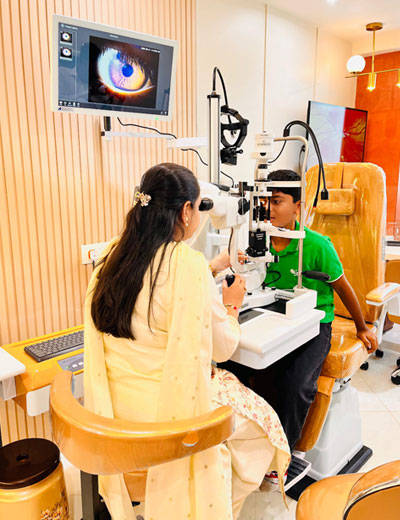
At Yuvaan Netralaya, we offer comprehensive eye examinations to evaluate your overall eye health and vision. Regular eye check-ups are essential for detecting eye conditions at an early stage, often before noticeable symptoms appear. Our experienced ophthalmologists use advanced diagnostic equipment to assess your vision, identify eye diseases, and recommend personalized treatment plans to help maintain healthy eyesight throughout every stage of life.
A complete eye examination is a detailed assessment of your vision and overall eye health. It includes various diagnostic tests to evaluate visual acuity, eye pressure, eye muscle function, refractive errors, and the health of the cornea, lens, retina, and optic nerve. The examination helps detect common vision problems as well as serious eye diseases in their early stages.
Routine eye examinations are recommended for:
Our comprehensive eye examination may include:
At Yuvaan Netralaya, we believe that prevention is the key to lifelong healthy vision. Every patient receives a personalized eye assessment using advanced diagnostic technology. Based on the findings, our ophthalmologists provide expert guidance, treatment recommendations, and follow-up care to ensure the best possible visual health.
Regular comprehensive eye examinations play a vital role in maintaining healthy vision and detecting eye diseases before they affect your eyesight. Early diagnosis allows timely treatment, helping to preserve vision and prevent future complications.
The frequency of follow-up examinations depends on your age, medical history, vision requirements, and existing eye conditions. Our ophthalmologists recommend regular eye check-ups to monitor your eye health, detect changes early, and provide timely treatment whenever necessary.
Most adults should have a comprehensive eye examination every one to two years. However, people with diabetes, glaucoma, high blood pressure, or other eye conditions may require more frequent check-ups as advised by their ophthalmologist.
Yes. A complete eye examination includes a detailed vision assessment, refraction for spectacle or contact lens prescription, and a thorough evaluation of your overall eye health.
Yes. Comprehensive eye examinations help detect conditions such as cataracts, glaucoma, diabetic retinopathy, macular degeneration, and other eye diseases at an early stage, often before symptoms become noticeable.
Yes. Regular eye examinations are important for children to detect vision problems early, support healthy visual development, and ensure optimal learning and daily activities.