

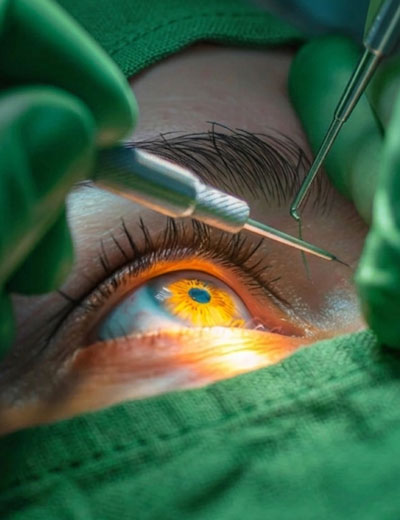
At Yuvaan Netralaya, we offer advanced Refractive Surgery to help reduce dependence on spectacles and contact lenses. Refractive errors such as myopia (near-sightedness), hyperopia (far-sightedness), and astigmatism can affect everyday vision and quality of life. Our experienced ophthalmologists use advanced diagnostic technology to evaluate your eyes and recommend the most suitable vision correction procedure for safe and effective results.
Refractive surgery is a vision correction procedure that reshapes the cornea to improve the way light focuses on the retina. It is performed to correct refractive errors and reduce the need for spectacles or contact lenses. Every patient undergoes a comprehensive eye evaluation to determine suitability for the procedure.
Refractive surgery may be suitable for individuals who:
Refractive surgery is commonly performed to correct:
At Yuvaan Netralaya, every patient undergoes a detailed eye examination, corneal evaluation, and advanced diagnostic testing before planning refractive surgery. Our ophthalmologists carefully assess corneal thickness, eye health, refractive error, and lifestyle requirements to recommend the most appropriate treatment while ensuring safety, precision, and optimal visual outcomes.
Refractive surgery provides long-term vision correction by addressing the underlying refractive error of the eye. For suitable candidates, it can significantly improve visual clarity, reduce dependence on corrective eyewear, and enhance overall quality of life.
Recovery following refractive surgery is generally quick, although healing time may vary depending on the type of procedure performed and individual eye conditions. Most patients notice improvement in vision within a short period. Regular follow-up visits, prescribed eye drops, and following your ophthalmologist's instructions are essential to achieve the best possible results.
Refractive surgery is suitable for individuals with stable spectacle power, healthy eyes, and refractive errors such as myopia, hyperopia, or astigmatism. A comprehensive eye examination is necessary to determine eligibility.
Many patients experience significant reduction in their dependence on spectacles or contact lenses. However, the outcome depends on your eye condition, age, and the type of refractive error being treated.
The procedure is generally comfortable as numbing eye drops are used before surgery. Some patients may experience mild discomfort or irritation for a short period during recovery.
Recovery is usually quick, and many patients can resume most routine activities within a few days. Your ophthalmologist will provide personalized guidance based on the type of procedure performed and your healing progress.